StrategyMay 28, 2026 · 7 min read

Oral Surgeon Implant Marketing That Builds GP Referral Flow And Direct-to-Patient Volume

Thiago Carvalho

· Founder & CEO

Published · Updated

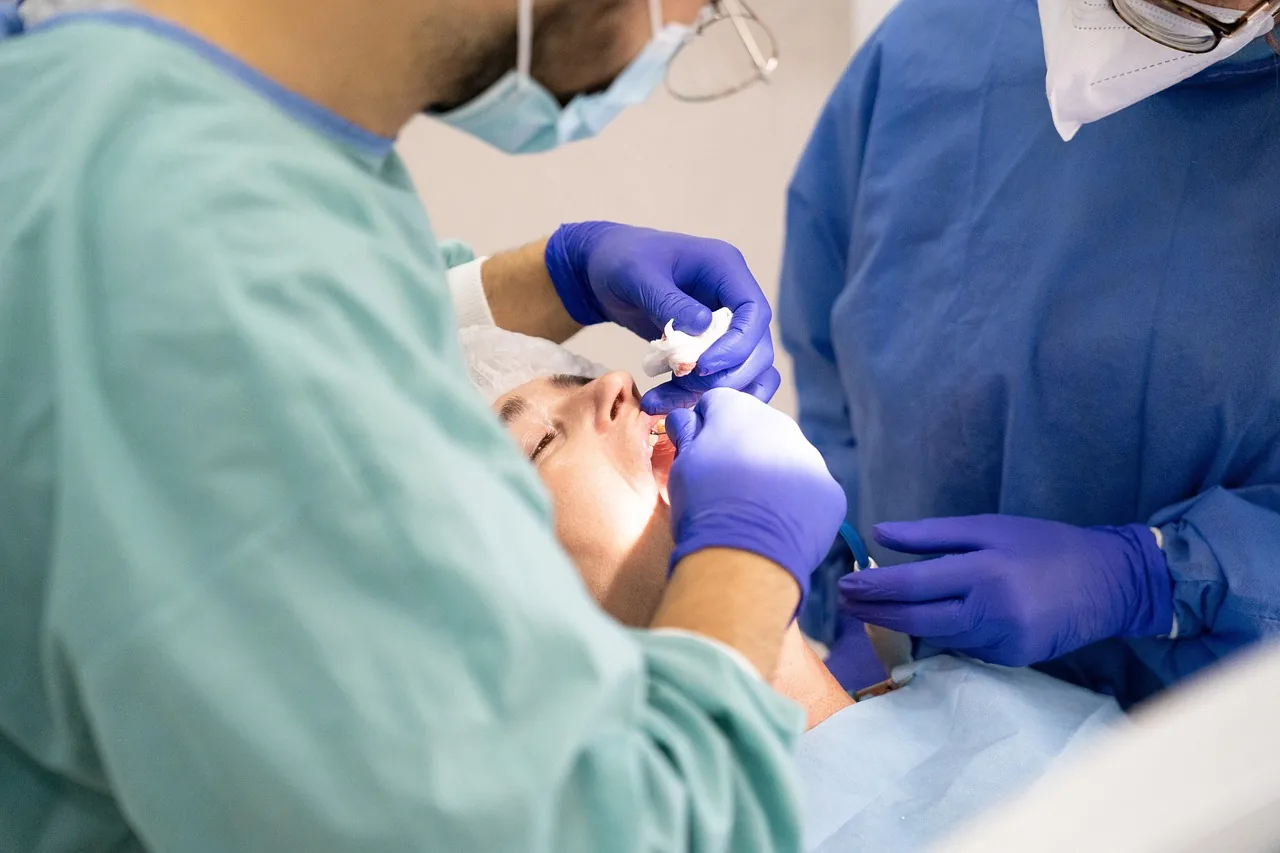
Oral surgeon placing dental implants

An oral and maxillofacial surgeon running an implant-heavy practice lives in two marketing universes simultaneously. The first is the traditional referral world — general dentists, prosthodontists, and periodontists who send cases for surgical placement. The second is the rapidly growing direct-to-patient world, where 47% of full-arch patients now bypass their GP and search for a surgeon themselves. Most surgical practices over-index on the first universe and ignore the second, leaving 30–60% of available implant revenue on the table. OMS practices need parallel marketing infrastructure: a referring-doctor program with quarterly case reports and CE events on one track, and a consumer-facing brand with paid social, surgical-authority content, and direct booking on the other. This article covers both: how to nurture and expand GP referrals systematically, how to launch a consumer brand without alienating referring offices, the credentialing-forward content that converts direct patients, and the case acceptance choreography that lifts seated-case rates from 35% to 55–65% on direct inquiries.

The Two-Universe Marketing Reality for OMS Practices

Why Referral-Only Caps Growth at One Chair

A pure referral-driven OMS practice tends to plateau at roughly one busy surgical chair plus extractions, because the volume of full-arch referrals from any local GP network is finite and slow to expand. The math is constrained by how many GPs exist in your service radius, how many full-arch candidates each sees per year, and what share of those referrals you can credibly capture. For most metros, that ceiling lands around $1.2M–$2.4M annual implant revenue from referrals alone — comfortable, but capped.

The Direct-to-Patient Search Surge

Google search data shows direct patient searches for 'oral surgeon near me,' 'dental implants surgeon,' and 'all on 4 oral surgeon' have grown 38–62% year over year for three consecutive years. The same trend appears in YouTube and TikTok queries, where patients now research specific surgeons before they have any GP conversation. The direct demand exists; the question for an OMS practice is whether to capture it or let a competitor do so.

Positioning a Brand for Both Audiences Without Conflict

The trick is brand architecture that speaks to both referring GPs and consumer patients without one alienating the other. Lead with surgical authority, credentials, and case complexity rather than discount offers or 'family friendly' language that would signal you are competing with referring offices on general dentistry. Maintain a professional, specialty-medical tone across all consumer-facing content that reinforces 'this surgeon handles the cases your GP refers' rather than 'come here instead of your dentist.'

GP Referral Systems That Compound

Quarterly Case-Report Mailers That Doctors Actually Read

A printed quarterly case-report mailer — three documented surgical cases per quarter with CBCT scans, surgical sequence photos, treatment plans, and 6-month outcome documentation — is the highest-ROI referral marketing asset most OMS practices never produce. It works because it gives the GP something tangible to share in operatory conversations with implant-candidate patients, and it signals surgical competence in a way no email or postcard can match. Send to every GP in a 25-mile radius regardless of current referral status.

CE Events as a Referral Multiplier

Hosting a quarterly continuing-education event at your surgical center — a 90-minute clinical presentation on a specific topic (immediate-load protocols, zygomatic implants, soft-tissue grafting, sedation safety) that qualifies for 1.5 CE credits — fills 15–28 GP seats per event and produces 4–9 new referring relationships per event. The event format works because it puts GPs inside your operatory, lets them meet your team, and positions the surgeon as the local subject-matter authority.

Lunch-and-Learn Cadence and the 90-Day Reactivation Rule

Smaller-scale lunch-and-learns at the GP's own office — 30 minutes during the GP's lunch hour, lunch catered for the whole team — are how you build the relationship before any patient is referred. The cadence matters: a referring office that has not heard from you in 90 days starts referring elsewhere, even after years of consistent referrals. Build a rolling calendar that touches every active referrer at least once per quarter.

Direct-to-Patient Channels for Surgeons

Paid Search on High-Complexity Implant Queries

OMS practices should compete primarily on high-complexity, high-value implant queries where surgical credentials matter most: 'all on 4 oral surgeon,' 'full arch implants oral surgeon,' 'zygomatic implants near me,' 'bone graft dental implant,' 'sinus lift implant surgeon.' These terms carry lower volume than generic 'dental implants near me' but convert at 2–4x higher rates because the searcher has self-identified as a complex case looking for specialty care.

Long-Form Educational Content That Signals Specialty

Consumer patients researching full-arch surgery want depth, not soundbites. A 2,500-word page explaining the surgical sequence for All-on-4, with CBCT illustrations, recovery timeline, sedation options, and complication rates, signals specialty authority and ranks for dozens of long-tail queries simultaneously. Build a content library of 15–25 such pages covering the full surgical procedure menu, and the entire library becomes a discovery engine that quietly produces inquiries for years.

Local SEO for the Surgical Search Stack

Local SEO for OMS practices targets a different keyword stack than general dentistry: 'oral surgeon [city],' 'oral and maxillofacial surgeon near me,' 'implant surgeon [city],' 'wisdom tooth extraction [city],' plus the surgical-procedure modifiers above. Google Business Profile optimization, Bing Places, Apple Maps, and 80+ data-aggregator citations all need to carry the surgical specialty designation explicitly, not generic 'dentist' categorization that competes against family practices.

Credentialing-Forward Content That Converts

Surgeon Bio Pages That Lift Booking 2x

Direct-to-patient buyers are choosing a surgeon, and the surgeon bio page is often the most-visited page on the entire site. Build it as a dedicated, fully developed page (not a 200-word footer paragraph) containing: dental school, surgical residency or fellowship, board certifications, ABOMS or other specialty board status, hospital affiliations, professional society memberships, surgical case count by procedure type, original research or publications, and a 60–90 second introduction video.

Case Documentation With CBCT and Outcomes

A documented case library — 20–40 cases with CBCT scans, surgical sequence photos, treatment plans, and 6-or-12-month outcome documentation — anchors the entire consumer marketing program. The library proves competence in a way that testimonials and star ratings cannot, because it shows the buyer what the actual clinical work looks like. Display 8–12 cases on the website and reference the broader library in TC conversations and consult-room presentations.

Case Acceptance for Direct Inquiries

TC Scripts Built for Surgical Authority

Direct-acquired patients arrive with different psychology than referred patients. They are more skeptical, more price-sensitive, and have done more comparison shopping. The TC script must immediately position surgical specialty authority — 'Dr. Patel completed her oral surgery residency at Mayo Clinic and has placed over 3,200 implants' — within the first 90 seconds of the inbound call. That credibility anchor reframes the entire conversation from shopping to vetting.

Financing Pre-Qualification Before the Consult

Direct-acquired full-arch patients are 2.5x more likely to fall through on financing than referred patients, because no GP has pre-screened them for ability to pay. Solve this by requiring soft-pull financing pre-qualification through CareCredit, Proceed Finance, or Lending Club before scheduling the consult. The pre-qualification is non-binding for the patient but lets the TC schedule with confidence that financing will not collapse the case on consult day.

Related reading

Frequently Asked Questions

Will direct-to-patient marketing damage our GP referral relationships?

Not when positioned correctly. Lead consumer marketing with surgical specialty and complex-case experience rather than discount offers or family-dentistry messaging, and most referring GPs welcome the visibility. A brief conversation or letter to top referrers explaining the consumer focus on full-arch and surgical cases prevents almost all friction. Practices that handle this well grow both channels simultaneously.

What percentage of OMS implant revenue typically comes from direct marketing versus referrals?

Mature OMS practices with both channels active typically run 35–55% of implant revenue from direct-acquired patients and 45–65% from referrals after 18–24 months of consistent direct marketing investment. The split is incremental — direct marketing rarely cannibalizes referral volume — so the total practice revenue typically doubles or triples compared to a referral-only baseline.

How much should we budget for direct-to-patient marketing as an OMS practice?

Most OMS practices launching direct-to-patient channels budget $8,000–$25,000 monthly for the first 12 months, scaling to $25,000–$60,000 monthly once the funnel is producing positive ROI. Below $8,000 monthly it is difficult to maintain consistent paid presence in mid-to-large metros, and below $5,000 the program typically fails to generate enough volume to validate.

Do we need a separate website for the consumer-facing implant brand?

Most successful OMS practices use a single domain with clear navigation separation: a 'For Patients' section optimized for direct inquiries and a 'For Referring Doctors' section with case reports, referral forms, and CE event calendars. Separate domains are only justified at very high volume or when launching a multi-location implant center model alongside the surgical practice.

How long until referral volume from CE events and mailers becomes measurable?

First incremental referrals from CE events typically arrive within 30–60 days of the first event, with steady-state volume building over 12 months as the referring network compounds. Quarterly mailers produce a slower compounding curve but reach a much broader audience. Combined, the two programs typically produce a 25–50% lift in referral volume within 12 months.

Implant Prospect is a dental implant marketing agency built for implant-focused practices. If you want help applying this to your own schedule, get in touch. Get in touch →

Want This Strategy For
Your Practice?

Book a free 30-minute strategy call and we'll build a custom plan for your market.

From the Founder

Implant Prospects was founded by Thiago Carvalho, author of two books on dental implant marketing. He is also the founder of ZenData CRM, a CRM built for dental practices to book, manage, and retain the patients their marketing brings in.