
StrategyMay 28, 2026 · 8 min read

All-on-X Marketing That Fills Your Surgical Calendar With Qualified Full-Arch Cases

Thiago Carvalho

· Founder & CEO

Published · Updated

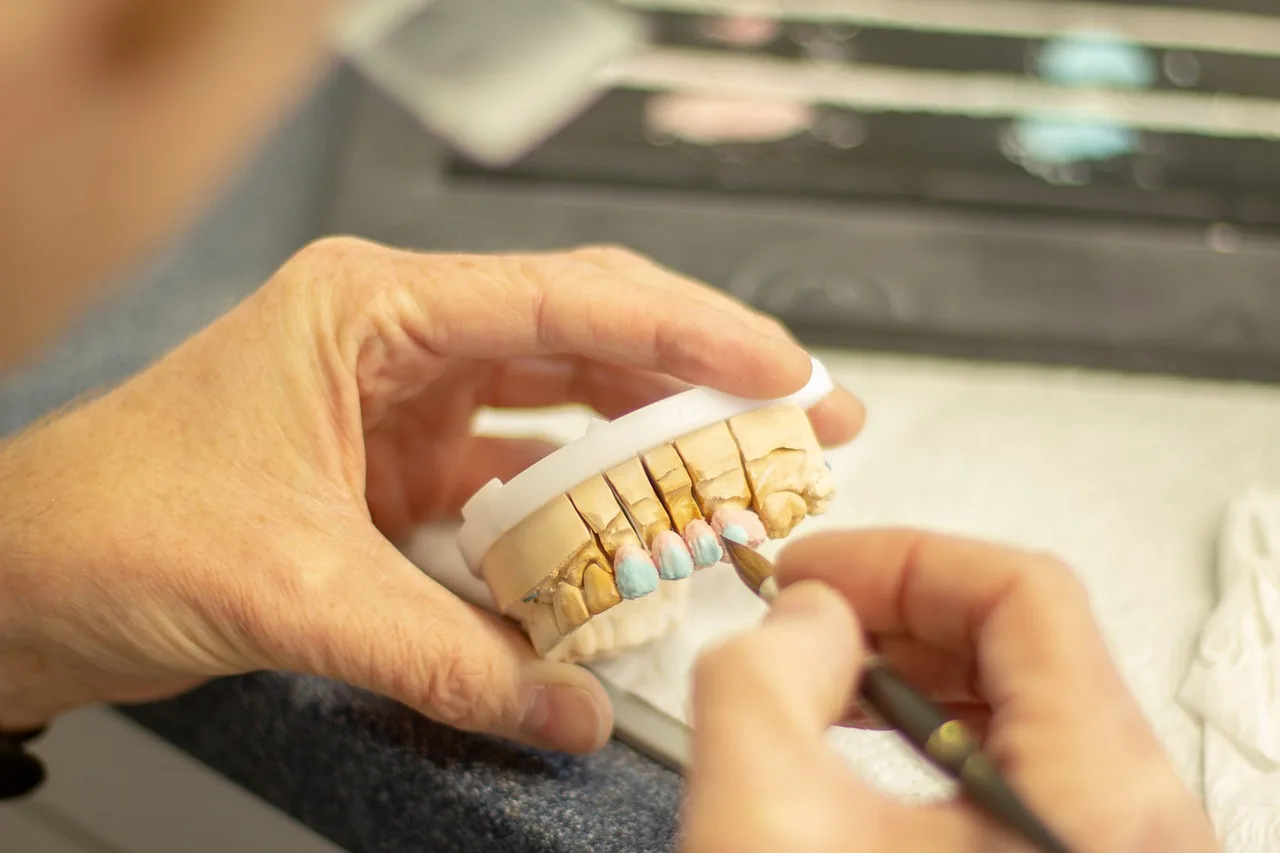
Full-arch implant prosthetics on the lab bench

All-on-X is the most profitable single procedure in modern dentistry — a $25,000 to $70,000 case with a 60 to 90 minute surgical day and lifetime patient loyalty that no whitening, no veneer case, no aligner program can match. It is also the most poorly marketed. Most practices throw 'All-on-4' onto a generic implant landing page, run a $40-per-click PPC campaign, and wonder why the leads they get are price-shoppers and tire-kickers. All-on-X marketing requires its own funnel — its own audience, its own creative, its own consultation flow — because the buyer is fundamentally different from the single-tooth replacement prospect. All-on-X marketing systems have to be engineered for the actual full-arch buyer: the 55-to-72-year-old denture-wearer or failing-dentition patient who has waited five to fifteen years to fix this, has the financial capacity, and is ready to commit when the funnel meets her on her terms. The result is a calendar of qualified surgical consultations rather than a stack of unqualified inquiries.

The All-on-X Funnel Architecture That Books Surgical-Ready Consults

An All-on-X marketing funnel is not a landing page with a form. It is a three-stage system — discovery, education, and qualified booking — where each stage is engineered for the specific psychological work the prospect needs to complete before she can comfortably book a consultation. Practices that compress this funnel into a single landing page and form get cheap leads that never close; practices that respect the three-stage architecture get fewer leads at higher cost-per-lead but dramatically higher revenue-per-lead.

Stage One: Discovery Creative That Reaches The Real Buyer

Stage-one creative lives on Meta, YouTube, and Google Discovery. The objective is not to drive form fills — it is to be the first or second touch in the prospect's emerging awareness that something better than dentures exists. Creative is patient-story-led, typically 30 to 90 seconds of video featuring a completed All-on-X patient describing the before-and-after of her life. Targeting layers demographic age, income proxies, and behavioral signals like denture-care product purchases and life-event triggers. Cost per video view is low; cost per form fill is irrelevant at this stage.

Stage Two: Education Pages And Lead Capture That Pre-Qualify

Stage-two assets are long-form education pages and lead magnets that filter for serious prospects. A 12-page printable guide titled 'What You Actually Need To Know Before Choosing All-on-X' captures email and phone in exchange for genuinely useful content — typical timelines, what surgical day feels like, how to evaluate a surgeon's experience, and what questions to ask. The guide is engineered as much for filtering as for content delivery: prospects unwilling to consume 12 pages are not yet ready for a $60,000 commitment.

Stage Three: Booking Flow That Protects Surgical Calendar Quality

Stage three is the consultation booking flow, and most practices destroy their economics here by treating it as a pure conversion event. The right All-on-X booking flow includes a brief intake form (15 to 20 fields), a $99 to $199 refundable consultation deposit, and a calendared call from the treatment coordinator within 24 hours of booking to confirm and prepare the prospect. Each of these steps reduces no-show risk and pre-qualifies financial seriousness without filtering out genuine buyers.

Paid Media Channel Strategy Tuned For The All-on-X Audience

Generic implant PPC playbooks fail All-on-X because the channel mix is wrong. Google Search is too narrow and too expensive for an audience that does not type 'all on 4 near me' until very late in the journey. Meta dominates for the 55-to-72 demographic but requires creative discipline that most agencies do not bring. YouTube is undervalued and produces some of the cheapest qualified All-on-X consultations available in any channel.

Meta As The Volume Engine For Full-Arch Prospects

Meta's combination of Facebook and Instagram is still where the 55-to-72 implant demographic spends 60 to 180 minutes per day. The platform's interest, behavioral, and lookalike targeting allows precise audience construction — past denture-care purchasers, AARP-affiliated profiles, life-event triggers — at scale no other platform offers. Daily ad spend of $75 to $300 sustains steady All-on-X consultation volume in most metros, with cost per booked consultation typically landing between $185 and $425 once the funnel is mature.

YouTube Pre-Roll And Google Search For The Bottom Of Funnel

YouTube pre-roll targeted to high-intent search queries — 'all on 4 reviews,' 'dental implant cost,' 'denture alternatives' — delivers low-cost video impressions to prospects already actively researching. Bidding for 30-second views at $0.06 to $0.18 in most markets produces brand familiarity and educational priming at a fraction of Google Search ad costs. YouTube also serves as the highest-performing remarketing channel for prospects who visited the All-on-X landing page but did not convert.

Connected TV, Streaming Audio, And The Brand Layer Most Practices Skip

Connected TV and streaming audio — Hulu, Roku, Pluto, Spotify, iHeart — are the most underused channels in All-on-X marketing and the most effective at reaching the 55-to-72 demographic at home in the evening, when the implant decision actually gets discussed with a spouse. CTV inventory targeted to ZIP codes within a 25-mile drive radius typically runs $22 to $48 CPM in most US metros, producing thousands of high-attention 15 to 30 second video impressions per week against a precisely qualified geographic audience. Practices running $1,500 to $3,500 per month in CTV spend see brand search volume lift 30 to 60 percent within 90 days.

Consultation Conversion And Surgical Calendar Economics

An All-on-X marketing funnel that fills the consultation calendar but does not produce closed surgical cases is a funnel that has failed. The economics of full-arch only work if the consultation-to-close rate sits above 28 percent and the average accepted case value clears $45,000. Both numbers are achievable but require deliberate engineering of the in-practice consultation experience as a continuation of the marketing funnel rather than a separate process.

The Treatment Coordinator As The Pivot Point

The treatment coordinator is the single highest-leverage role in the All-on-X economy. A skilled coordinator running structured consultations closes at 35 to 50 percent on qualified marketing leads; an untrained or absent coordinator drops that number to 12 to 22 percent. The difference across a year of marketing investment is hundreds of thousands of dollars in surgical revenue. Design the coordinator role explicitly — script frameworks, consultation flow, financing conversation timing — as the operational mirror of the marketing funnel.

Surgical Calendar Throughput And Case Mix

All-on-X economics depend on surgical throughput and case mix as much as on lead generation. A practice with a single surgical day per week capped at three full-arch cases per day has different marketing requirements than a practice running same-day arches every business day. Model surgical capacity against marketing investment so the funnel produces the right number of consultations — over-producing leads against a constrained surgical calendar burns marketing dollars and damages patient experience through scheduling delays.

Post-Consult Follow-Up That Recovers The Sixty Percent Who Do Not Close Same-Day

Even an elite consultation experience closes 35 to 45 percent of full-arch cases same-day. The remaining 55 to 65 percent leave the practice undecided — and what happens in the next 14 days determines whether half of them eventually close or whether the entire consultation investment evaporates. Structured post-consult follow-up sequences recover a meaningful share of these undecided prospects and lift the total close rate on qualified consultations. The recovery sequence is the single highest-ROI operational lever in the All-on-X funnel.

Measurement, Attribution, And The Twelve-Month All-on-X Marketing Plan

All-on-X marketing is a long-horizon investment. The compounding effects of patient story libraries, email lists, organic SEO authority, and treatment coordinator skill development do not show up in month one or month two. The right way to operate the program is a 12-month rolling plan with quarterly review cycles, anchored to closed-case revenue and lifetime patient value rather than cost-per-lead and click-through rate.

Quarterly Review Cycles And The Numbers That Matter

Each quarter, review the All-on-X program against four numbers: closed-case revenue, average accepted case value, cost per closed arch, and consultation-to-close ratio. Trends matter more than single-month snapshots — a 90-day rolling average smooths the noise of small case counts and reveals genuine direction. Programs trending in the right direction get reinvestment; programs drifting get diagnostic attention before they bleed budget. The quarterly cadence is short enough to catch problems early and long enough to give compounding effects time to show.

Twelve-Month Plan Structure And Reinvestment Loop

A mature All-on-X marketing plan looks like a rolling 12-month forecast: month-by-month budget allocation across Meta, YouTube, Google Search, and email infrastructure; quarterly content production calendar; planned consultation volume targets; planned closed-case revenue. Each quarter, the next three months get refined based on the prior quarter's data, and the back nine months stay directionally stable. This rolling structure prevents both short-term reactive thrashing and long-term plan rigidity.

Related reading

Frequently Asked Questions

What is the realistic cost per closed All-on-X arch in a competitive market?

Mature All-on-X marketing programs in competitive US metros typically produce closed arches at $1,800 to $4,500 in total marketing cost, including media, content production, and agency fees. New programs run 2 to 3 times higher during the first 90 days as the funnel calibrates. Practices reporting closed arches under $1,500 in marketing cost are typically benefiting from established organic authority or unusually strong referral mechanics layered on top of paid marketing.

How many consultations should a healthy All-on-X funnel produce per month?

It depends on surgical capacity, but a single-doctor practice with two surgical days per week typically needs 18 to 32 qualified consultations per month to maintain a healthy close pipeline at industry-standard 28 to 38 percent close rates. Multi-doctor or multi-location practices scale that proportionally. Funnels producing far more than capacity destroy patient experience; funnels producing far less than capacity leave surgical revenue unrealized.

Is YouTube actually worth the production effort for All-on-X marketing?

Yes — but only with patient-story-led video, not doctor-led explainers as the primary creative. YouTube pre-roll against in-market implant search queries consistently produces booked consultations at 40 to 65 percent of Google Search costs in most metros, and the brand familiarity it builds compounds over 6 to 12 months. Practices unwilling to invest in quarterly patient video shoots will not extract this performance from YouTube.

Should we run All-on-X campaigns separate from general implant campaigns?

Yes — fully separate. The All-on-X buyer demographics, creative angles, financing conversations, and consultation booking flow are all different from single-tooth implant prospects. Running unified campaigns optimizes against blended metrics that hide which segment is actually producing closed cases, and dilutes creative testing. Separate budgets, separate landing pages, separate email sequences, and separate reporting are the standard structure for serious All-on-X programs.

Does requiring a consultation deposit hurt lead volume?

Lead volume drops 15 to 30 percent when a refundable deposit is introduced, but closed-case revenue typically rises 25 to 45 percent because no-show rates collapse and consultation quality lifts dramatically. The deposit functions as a financial qualifier that filters out prospects unwilling to make small commitments before $60,000 conversations. A refundable deposit of $99 to $199 is the standard for mature All-on-X programs.

Implant Prospect is a dental implant marketing agency built for implant-focused practices. If you want help applying this to your own schedule, get in touch. Get in touch →

Want This Strategy For
Your Practice?

Book a free 30-minute strategy call and we'll build a custom plan for your market.

From the Founder

Implant Prospects was founded by Thiago Carvalho, author of two books on dental implant marketing. He is also the founder of ZenData CRM, a CRM built for dental practices to book, manage, and retain the patients their marketing brings in.