Dental Implant SEO · 2026 Guide
Dental Implant SEO: The Complete Guide for Implant & Full-Arch Practices (2026)
Everything an implant-focused practice needs to know to rank on Google in 2026 — keyword strategy, Map Pack engineering, full-arch content, real pricing benchmarks, and how to choose the right partner. No fluff, no recycled general-dentistry advice.
Part of our 2026 implant marketing series: the best dental implant marketing agencies compared, what implant marketing costs, implant PPC benchmarks, the full-arch playbook and implant lead generation by channel.

1. Why Dental Implant SEO Is Not General Dental SEO
Most dental SEO advice is written for family practices chasing hygiene patients. It tells you to rank for "dentist near me," blog about flossing, and celebrate when traffic goes up. Follow that playbook as an implant or full-arch practice and you will attract exactly the wrong patients: insurance-driven cleanings, emergency extractions, and price shoppers — while the $30,000 full-arch case books with the competitor across town who understood the difference.
Dental implant SEO is a different discipline for three structural reasons.
The keyword universe is smaller but dramatically more valuable. "Dentist near me" might get fifty times the search volume of "all on 4 dental implants cost," but the second searcher is worth 100–400x more as a patient. Implant SEO deliberately trades volume for intent. Every page, every ranking, and every dollar is pointed at the searches made by people who have failing dentition, are researching permanent solutions, and have (or can finance) the budget to act.
The buying journey is longer and more emotional. Nobody researches a hygiene appointment for four months. Full-arch patients do. They search across a predictable arc — symptoms, then solutions, then costs, then providers — often over 90 to 180 days, frequently at night, frequently ashamed of their smile. An SEO strategy that only targets "dental implants [city]" captures the last step of that journey and forfeits every step before it. The practices that dominate implant search own the whole arc.
Trust requirements are surgical-grade. Google's quality systems hold "Your Money or Your Life" content — and surgical procedures are squarely in that category — to a higher evidentiary standard. Thin, outsourced content that would rank fine for a landscaping company gets filtered out in implant search. Author credentials, clinical accuracy, case documentation, and review depth all carry direct ranking weight.
If your current marketing partner is running a general-dentistry playbook on an implant practice, that mismatch — not "SEO takes time" — is usually why the pipeline is empty. It's the single most common problem we diagnose when practices come to us, and it's why our entire methodology at Implant Prospect is built exclusively around implant and full-arch patient acquisition rather than general dental marketing.
2. The Economics: Why Implant SEO Out-Earns Every Other Channel
Before tactics, the math — because the math is what makes implant SEO worth doing aggressively.
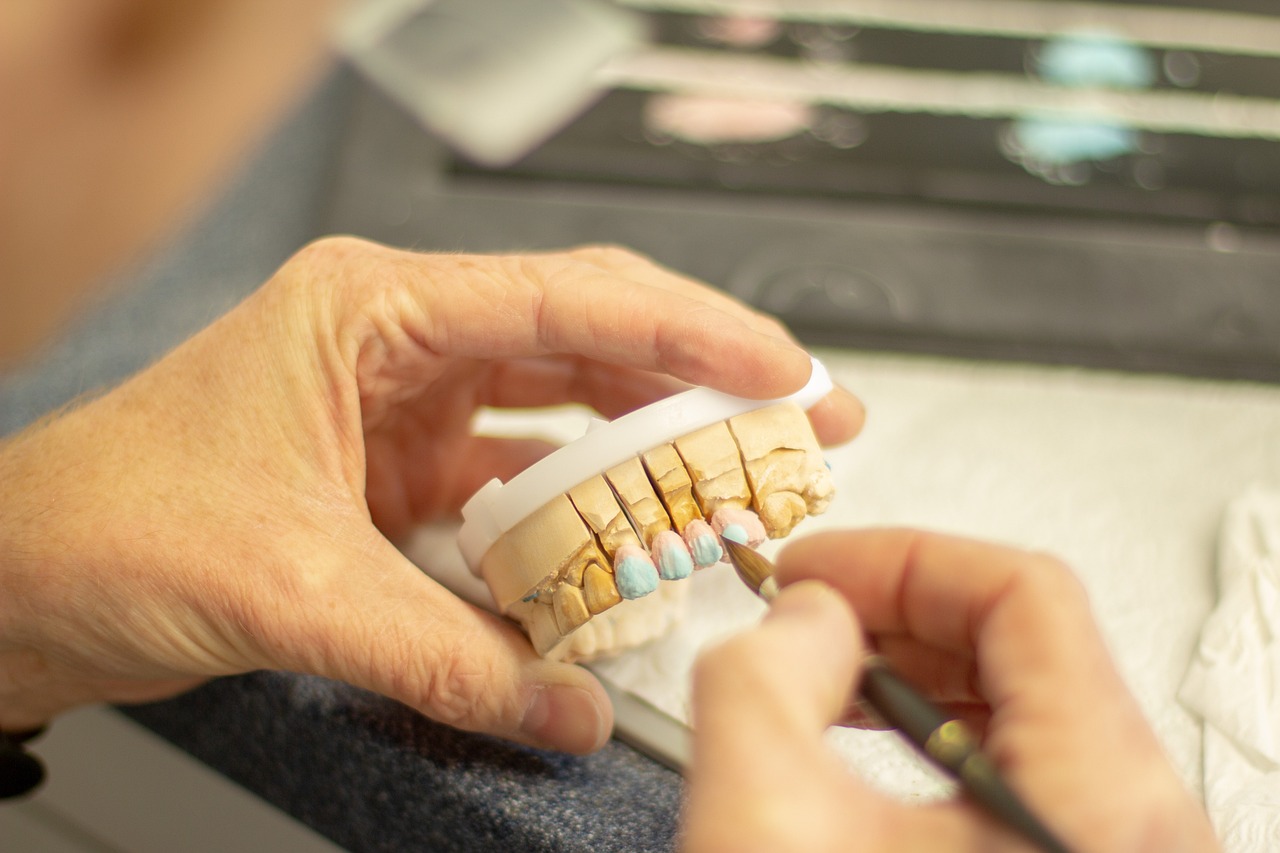
A single-tooth implant case typically produces $3,500–$6,500 in revenue. A full-arch case produces $25,000–$60,000 depending on market and protocol. Now run the channel comparison. A practice spending $4,000/month on implant-focused SEO that produces just one incremental full-arch case per quarter generates roughly $100,000–$200,000 in annual revenue against a $48,000 annual spend — before counting single-tooth cases, multi-implant cases, and the referral halo from every restored patient.
Compare that to paid channels, where full-arch cost-per-lead commonly runs $150–$400 and cost-per-acquired-case can exceed $2,000–$5,000 in competitive metros — costs that reset to zero the day you pause the campaign. SEO behaves differently: the cost is front-loaded, and the asset compounds. A page that reaches position 1–3 for "dental implants [city]" keeps producing patients month after month at zero marginal cost. Two years in, well-executed implant SEO routinely delivers the lowest cost-per-case of any channel a practice runs.
The compounding rule: paid ads are a faucet — flow stops when spending stops. SEO is a well — expensive to dig, nearly free to draw from. Elite practices use both, but the practices with the strongest margins are always the ones that dug the well early.
3. The Implant Keyword Map: What Patients Actually Search
Implant SEO keyword strategy is not a list — it's a map of patient psychology. Every implant patient moves through four search modes, and your site needs a ranking asset for each one.
| Stage | What the patient feels | Example searches | Asset that should rank |
|---|---|---|---|
| Problem-aware | "My teeth are failing and I'm embarrassed." | loose dentures solutions · can't chew with dentures · replace all my teeth · failing teeth options | Empathetic educational guides + symptom pages |
| Solution-aware | "I've heard of implants — are they right for me?" | all on 4 vs dentures · dental implants vs bridge · zygomatic implants · same-day teeth · full mouth dental implants | Comparison pages + procedure explainers |
| Cost-aware | "Can I afford this?" | all on 4 cost · full mouth implants price · dental implant financing · implants with bad credit | Transparent cost pages + financing pages |
| Provider-aware | "Who do I trust to do this?" | dental implants [city] · best implant dentist near me · all on 4 [city] · [doctor name] reviews | Location/service landing pages + Google Business Profile |
Three strategic notes on how to use this map:
- Cost keywords are the highest-leverage cluster in implant SEO. They combine strong volume, extreme intent, and weak competition — because most practices are afraid to publish prices. You don't need exact fees; ranges with financing context ("full-arch treatment in [city] typically ranges from $X–$Y per arch, with monthly payments from $Z") convert researchers into consultations better than any other content type we test.
- Provider-aware keywords are won locally, not editorially. No blog post ranks for "dental implants houston." Those results are Map Pack plus dedicated location landing pages. Sections 4 and 5 cover exactly how.
- Don't ignore denture-adjacent keywords. "Denture alternatives," "permanent dentures," and "snap-in dentures" are how a large share of full-arch patients describe the solution before they learn the clinical vocabulary. These terms are lower competition than implant terms and feed the same treatment plan.
4. Google Map Pack: Where Full-Arch Cases Are Won
For every provider-aware search — "dental implants near me," "all on 4 [city]" — Google shows a three-listing Map Pack above the organic results. On mobile, where the majority of implant searches happen, the Map Pack plus ads can occupy the entire first screen. If your practice isn't in that three-pack, you are invisible at the exact moment a patient chooses who to call.
Map Pack ranking runs on three factors — relevance, proximity, prominence — and implant practices can engineer all three:
Relevance: tell Google you're an implant practice, not a general dentist
- Primary Google Business Profile category set to Dental implants periodontist or Dental implants provider where appropriate — not just "Dentist." Secondary categories layered for cosmetic dentistry, oral surgery, prosthodontics as applicable.
- Services section fully built out: All-on-4, full-arch restoration, zygomatic implants, bone grafting, same-day implants, implant-supported dentures — each with a description.
- Weekly Google Posts featuring implant cases, technology, and patient stories. Dormant profiles decay.
- Q&A section seeded with the real questions patients ask (cost, sedation, timeline, financing) and answered by the practice.
Proximity: you can't move your office, but you can widen your footprint
Proximity bias means suburban patients often see suburban competitors first. The counter is a spoke system of hyper-local landing pages (covered in Section 5) plus consistent citations, which extends your organic reach into the suburbs even when the Map Pack favors closer offices. Multi-location groups should maintain a fully built, independently reviewed profile per location — never one profile "covering" a region.
Prominence: reviews are the ranking factor you control most directly
Prominence is driven heavily by review volume, velocity, rating, and — critically for implant SEO — keyword content inside the reviews themselves. A profile with 300 reviews that repeatedly mention "implants," "All-on-4," and "full mouth restoration" will outrank a 4.9-star profile full of generic "great cleaning!" reviews for implant searches. Build the ask into your restorative workflow: every delivered arch, every restored smile, gets a same-day review request that gently prompts the patient to mention their procedure. Then reply to every review, naming the procedure again in your response.
Benchmark: in most competitive metros, the practices holding the implant Map Pack have 250+ reviews with 15–30 new reviews per month and procedure keywords in at least a fifth of them. Audit the current three-pack in your city and you'll know exactly what number you're chasing. Map Pack engineering is one of the core pillars of our Google domination system, because it's where the highest-intent patients actually click.
5. Site Architecture and Landing Pages That Convert
Google ranks pages, not practices. The single biggest architectural mistake implant practices make is stuffing every procedure onto one "Services" page. The fix is a hub-and-spoke architecture where every high-value keyword cluster gets a dedicated, comprehensive page:
- Procedure hubs: one authoritative page each for dental implants, All-on-4 / full-arch, implant-supported dentures, same-day implants, bone grafting, zygomatic implants. Each hub: 1,500+ words, procedure schema, before/after cases, surgeon credentials, FAQ block, financing module, and a single clear call to action.
- Cost pages: a dedicated cost page per major procedure ("All-on-4 Cost in [City]"). These are your highest-converting organic pages — treat them like landing pages, not blog posts.
- Location spokes: for each suburb or feeder town worth owning, a genuinely local page — "Dental Implants in [Suburb]" — with unique copy referencing local landmarks, driving directions, patients served from that area, and embedded map. Ten thin, duplicated city pages hurt you; five genuinely distinct ones extend your radius.
- Comparison spokes: "All-on-4 vs. dentures," "implants vs. bridges," "All-on-4 vs. All-on-6" — these capture solution-aware patients and internally link up to the procedure hubs.
Every spoke links up to its hub; every hub links to consultation booking. This internal-link discipline is how newer domains concentrate limited authority onto the pages that produce revenue — the same principle this article applies by linking to the pages on our own site that matter.
Architecture only pays if the pages convert once patients land. Sub-3-second load, click-to-call above the fold, financing calculators, and real case photography routinely double conversion rates versus template dental sites. If your current site can't support that, conversion-first rebuilds are exactly what our website team handles — the site is the landing strip for everything else in this guide.
6. Content Strategy Across the Full-Arch Patient Journey
Content for implant SEO has one job: meet the patient at every stage of a months-long decision and move them one step closer to a consultation. That means publishing against the four-stage keyword map from Section 3 — not blogging about "5 tips for whiter teeth."
What to publish, in priority order
- Cost and financing content. "How much do full-mouth dental implants cost in [state]?" · "Dental implant financing options with imperfect credit" · "Is All-on-4 covered by insurance?" Highest intent, weakest competition, fastest revenue impact.
- Comparison content. Head-to-head pages for every treatment decision the patient faces. These earn featured snippets and — increasingly — citations inside AI search results, which now drive a measurable share of implant consultations.
- Fear and objection content. "Does implant surgery hurt?" · "Dental implants while on blood thinners" · "Am I too old for implants?" This content converts the hesitant majority that never fills out a form on a services page.
- Case stories. Documented patient transformations — situation, treatment, outcome, photos, patient's own words. One well-told full-arch story outperforms ten generic posts, and it doubles as proof for E-E-A-T (next section).
Format for 2026 search, not 2019 search
Search results are now a blend of classic blue links, Map Pack, AI Overviews, and answer-engine citations. Structure every page so machines can lift answers from it: a direct 2–3 sentence answer under each question-style heading, FAQ schema, comparison tables, and named clinical entities (protocols, implant systems, sedation options). Practices structured this way are already appearing inside AI-generated answers while competitors' unstructured pages are skipped — a compounding advantage as AI search grows.
7. Technical SEO Essentials for Implant Practices
Technical SEO won't win rankings by itself, but technical debt silently caps everything else. The implant-practice checklist:
- Core Web Vitals: mobile load under 3 seconds. Most searches — and nearly all late-night full-arch research — happen on phones. Oversized hero videos and bloated page builders are the usual culprits.
- Schema markup: Dentist/LocalBusiness schema with geo-coordinates on every location page, MedicalProcedure or Service schema on procedure hubs, FAQPage schema on question content, Review/AggregateRating where policy-compliant.
- Indexation hygiene: no duplicate city pages, no orphaned pages, blog categorized properly (an "uncategorized" archive leaks authority), clean XML sitemap, canonicals resolved to one domain version.
- HIPAA-conscious analytics: call tracking and form analytics configured to attribute leads to keywords/pages without leaking PHI. If you can't tie a full-arch consult back to the page that produced it, you can't manage the program.
- Secure, crawlable media: before/after galleries as indexable images with descriptive alt text ("full-arch dental implant transformation, upper arch") — image search is an underrated implant patient source.
8. E-E-A-T, Reviews, and Why Google Trusts Some Surgeons More
Google's guidelines evaluate Experience, Expertise, Authoritativeness, and Trust with extra rigor on medical content. In implant SEO this is not abstract — it's the difference between content that ranks and content that's filtered. What builds it:
- Named clinical authorship. Every procedure page and clinical article attributed to the treating doctor, with credentials, fellowship affiliations (AAID, ICOI, ABOI), and a substantial bio page linked sitewide.
- Original evidence. Your own case photos, your own CBCT-guided workflow, your own patient outcomes. Stock photography and rewritten WebMD content are E-E-A-T poison.
- Review depth across platforms. Google first, but Healthgrades, RealSelf, and Facebook reviews corroborate trust signals.
- Consistent entity presence. The practice and doctors mentioned across directories, local press, podcast appearances, and study clubs — signals that a real, prominent clinical entity exists behind the website.
E-E-A-T is also where brand and SEO converge: a practice with a distinctive, credible brand earns clicks even from position 3, and click-through behavior feeds back into rankings. That interplay between brand authority and search performance is why we treat bespoke practice branding as part of the SEO stack, not a separate project.
9. Dental Implant SEO vs. Google Ads
The most common strategic question we hear — and the honest answer is that they're different tools for different timelines:
| Dental Implant SEO | Google Ads | |
|---|---|---|
| Speed to first lead | 60–120 days | 24–72 hours |
| Cost behavior over time | Declining cost per case as rankings compound | Flat or rising (implant CPCs of $15–$60+ keep climbing) |
| What happens if you stop | Rankings persist for months to years | Leads stop the same day |
| Trust perception | Organic + Map Pack results read as credibility | A share of high-value patients skip ads entirely |
| Typical full-arch cost per lead | Approaches $30–$80 at maturity | $150–$400 in competitive metros |
| Best for | Long-term market dominance, margin | Immediate pipeline, new-market launches, capacity fills |
The right answer for most implant practices is sequenced, not either/or: run Ads from day one to keep the surgical schedule full, build SEO simultaneously, then let paid spend taper as organic case flow compounds. Practices that run only Ads rent their pipeline forever; practices that run only SEO starve for the first six months. And filling the schedule is only half the equation — the leads still have to become accepted treatment plans, which is a sales-process problem as much as a marketing one. That handoff from lead to closed arch is exactly what our case acceptance system is built to fix.
10. What Dental Implant SEO Costs in 2026 (Real Numbers)
Almost no agency publishes pricing. Here's the actual market, so you can benchmark any proposal you receive:
| Tier | Monthly investment | What it typically includes | Right for |
|---|---|---|---|
| Foundation | $1,500–$2,500 | GBP optimization, citations, basic on-page work, 1–2 content pieces/month | Small-market practices, early-stage implant programs |
| Growth | $2,500–$5,000 | Full hub-and-spoke build-out, cost/comparison content program, review engine, technical SEO, monthly reporting tied to leads | Single-location practices in mid-size competitive markets |
| Market domination | $5,000–$10,000+ | Multi-domain strategy, aggressive content velocity, digital PR/local authority building, multi-location Map Pack engineering, full attribution | Full-arch-focused and multi-location practices in metro markets |
Three pricing red flags worth naming. Under ~$1,000/month for a "complete SEO program" means templated deliverables — at implant case values, cheap SEO is the most expensive option because of what it fails to produce. 12-month lock-in contracts protect agencies that can't retain clients on results. Traffic-based reporting ("sessions are up 40%!") without lead and case attribution means nobody is accountable for revenue. Anchor every proposal against the math from Section 2: at $25,000–$50,000 per arch, the question is never whether $4,000/month is expensive — it's whether the program can reliably produce one incremental case per quarter. Good ones produce far more.
11. How to Choose a Dental Implant SEO Agency
The dental marketing space is crowded with generalists who added "implant marketing" to their homepage last year. Cut through it with seven filters:
- Implant-specific proof. Ask for case studies showing full-arch case attribution — not traffic graphs. "We grew clicks 60%" is not a result; "the practice delivered 11 additional arches from organic in two quarters" is.
- Live rankings you can verify. Ask what implant keywords they currently rank clients for, then check in an incognito window. Agencies that rank nobody for implant terms can't rank you.
- They rank for their own keywords. An SEO agency you found on page 5 of Google is telling you something.
- Full-arch fluency. If they can't discuss All-on-4 vs. All-on-6, zygomatic protocols, or case acceptance economics, they'll produce content your patients — and Google's quality systems — recognize as shallow.
- Transparent pricing and no long lock-ins. Confidence looks like month-to-month or short initial terms with clear deliverables.
- Attribution infrastructure. Call tracking, form tracking, and reporting that ties keywords to consults to accepted treatment. If they don't lead with measurement, they're hiding from it.
- Exclusivity in your market. An agency serving three implant practices in one city is optimizing a conflict of interest, not your pipeline.
Do the comparison work openly. We publish direct, factual comparisons of how our approach differs from the agencies practices most often evaluate alongside us — including Progressive Dental, Wonderist Agency, Driven Dental Marketing, and Gilleard Dental Marketing — so you can pressure-test every claim in this section against real alternatives.
12. DIY vs. Agency: An Honest Breakdown
What a practice can absolutely do in-house — and should start this week regardless of who runs the broader program:
- Claim and fully build the Google Business Profile per Section 4, including implant-specific categories and services.
- Install a same-day review ask into the restorative workflow, prompting patients to mention their procedure.
- Publish honest cost-range and financing information on the website.
- Photograph and document every full-arch case (with consent) — the raw material every future content effort depends on.
Where DIY reliably breaks down: sustained content production at competitive depth, technical SEO, hub-and-spoke architecture, digital PR and authority building, and attribution engineering. These require 15–30 focused hours per week from someone who does this professionally. In a contested implant market, the in-house route usually plateaus at "visible" while a funded competitor program takes "dominant" — and in a winner-take-most Map Pack, the gap between those two positions is most of the revenue.
13. Timelines, KPIs, and What "Working" Looks Like
Set expectations by phase, and hold any partner — including us — to them:
- Days 0–60: technical foundation fixed, GBP rebuilt, architecture launched, review velocity climbing. KPI: indexation, review count, baseline rankings recorded.
- Days 60–120: long-tail and cost-content rankings appear; Map Pack visibility improves in the immediate radius. KPI: first attributable organic implant leads.
- Months 4–9: hub pages reach page one for city + procedure terms; consult flow becomes consistent. KPI: cost per organic lead trending down month over month.
- Months 9–18: Map Pack positions consolidate; the site earns AI-answer citations; organic becomes a top-two case source. KPI: organic-attributed arches per quarter.
The only metric that ultimately matters is attributed production — arches and implant cases traced to organic search. Everything else (rankings, traffic, even leads) is an input. Insist on reporting built around that number from month one.
14. Frequently Asked Questions
How much does dental implant SEO cost?
Most implant-focused engagements in 2026 run $2,000–$8,000/month depending on market and scope: roughly $2,500–$4,500 for single-location practices in mid-size markets, and $5,000–$10,000+ for metro full-arch or multi-location programs. At full-arch case values of $25,000–$50,000, one incremental case per quarter typically covers the entire annual investment.
How long until it produces patients?
Early movement in 60–90 days, meaningful lead flow by months 4–6, market-leading positions in 9–18 months depending on competition and starting point. Anyone promising page one in 30 days is describing keywords nobody searches.
Is SEO or Google Ads better for implant marketing?
Ads deliver immediately and stop immediately; SEO builds slowly and compounds. The strongest implant practices sequence both — Ads for near-term pipeline, SEO for long-term cost advantage — then rebalance as organic case flow matures.
What makes implant SEO different from general dental SEO?
A smaller, higher-intent keyword universe; a months-long emotional buying journey requiring full-funnel content; surgical-grade trust requirements under Google's medical content standards; and economics where a single ranking can be worth six figures annually. General-dentistry playbooks fail on all four counts.
Can I do it myself?
The foundations, yes — Google Business Profile, reviews, honest cost content, case documentation. Competitive full-arch rankings in contested markets, realistically no: the sustained content, technical, and authority work exceeds what a practice team can staff internally.
How do I evaluate an agency's claims?
Verify live rankings in incognito search, demand case studies with revenue attribution, check whether the agency ranks for its own keywords, confirm market exclusivity, and refuse long lock-in contracts. Then compare candidates directly — our published head-to-head comparisons are a good template for the questions to ask any agency.
Ready to See Exactly Where Your Practice Stands?
We'll audit your current implant search visibility — Map Pack position, keyword gaps, review profile, and site architecture — and show you the specific path to owning implant search in your market. No generic report, no obligation.
Explore Our Implant Marketing Services →